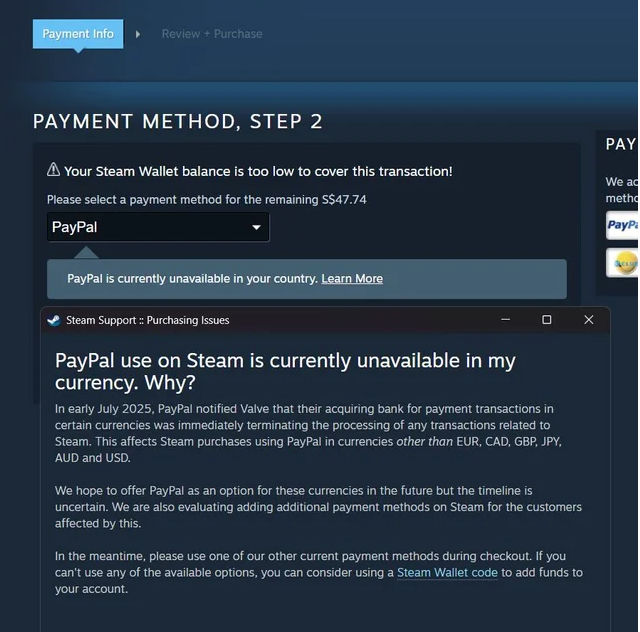
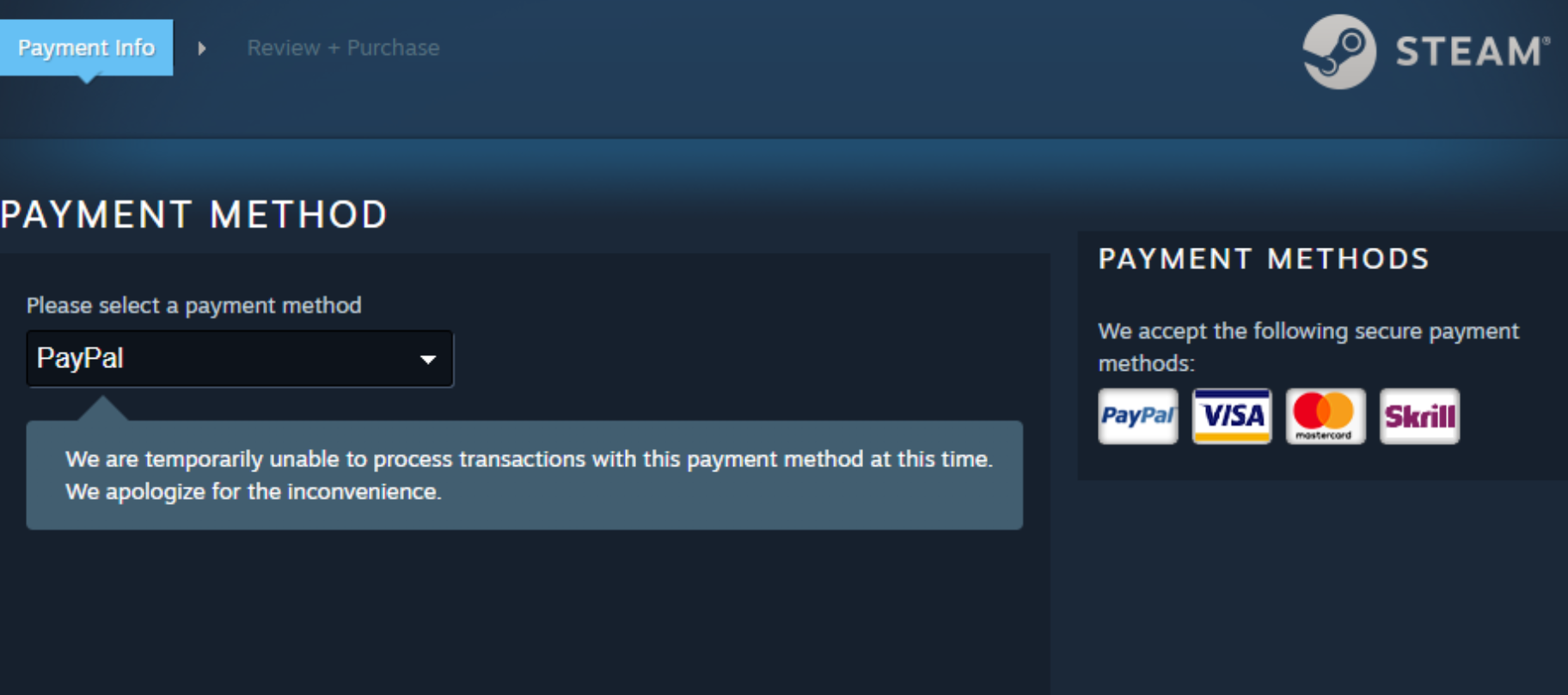
According to an article in Reddit, Valve ‘ s latest policy confirms that PayPal will no longer be a payment option for Steam stores in many countries and territories around the globe. This policy change will affect all currency transactions other than the euro, the Canadian dollar, the British pound, the Japanese yen, the Australian dollar and the United States dollar.

This change, which began at the beginning of July 2025, was not a technical malfunction, rooted in PayPal’s billing bank’s decision to stop processing specific currency transactions related to Steam. In its statement, Steam wrote: “In early July 2025, PayPal informed us that its billing bank, which is responsible for payment transactions for specific currencies, would immediately terminate all transactions related to Steam. This will affect the use of PayPal to trade in Steam in currencies other than the euro, Canadian dollars, the pound sterling, the yen, Australian dollars and the United States dollar.”
The billing bank is a financial institution that processes payments on behalf of the company. In this case, PayPal ‘ s decision to withdraw resulted in a large number of Steam users not being able to use PayPal for payment unless they chose to use one of the six supported currencies.
The challenge is to understand why it affects only specific countries/regions. According to a community post on Reddit, some of the users who contacted PayPal were told that this was Steam’s decision – but Valve’s official statement was clearly directed to PayPal’s banking partners.
This is not the first time that a payment processor has taken such action. Similar disputes had previously arisen in MasterCard, Visa and even Stripe, which were usually related to the pressure of the payer on games that contained adult or controversial content.
Industry analysts have noted a recurring pattern whereby payment providers tend to impose such restrictions first in small markets where consumer protection is weak before trying to expand. This enables them to test their voice without endangering high-priced areas such as the United States or the European Union. In previous cases, companies like MasterCard denied being involved in adult games, but V’s disclosures suggested the opposite, suggesting that behind-the-scenes financial policies drove these restrictions.
The larger problem is that this may be a coordinated operation between banks and payment companies to control the type of commercially available content on the network. Similar actions have previously led to policy changes in play platforms such as Steam and itch.io, which have resulted in bans on adult content creators.

At present, V Society is dealing with related issues, and although in the past “Valve Pay” was more than a barrier, it does not seem to be out of reach. In particular, Valve has a history of creating alternatives (e.g. Steam wallets) when external companies threaten its system ecology. Until then, players in the affected areas will have to rely on other means of payment or hope that the PayPal restrictions will be released at an early date.