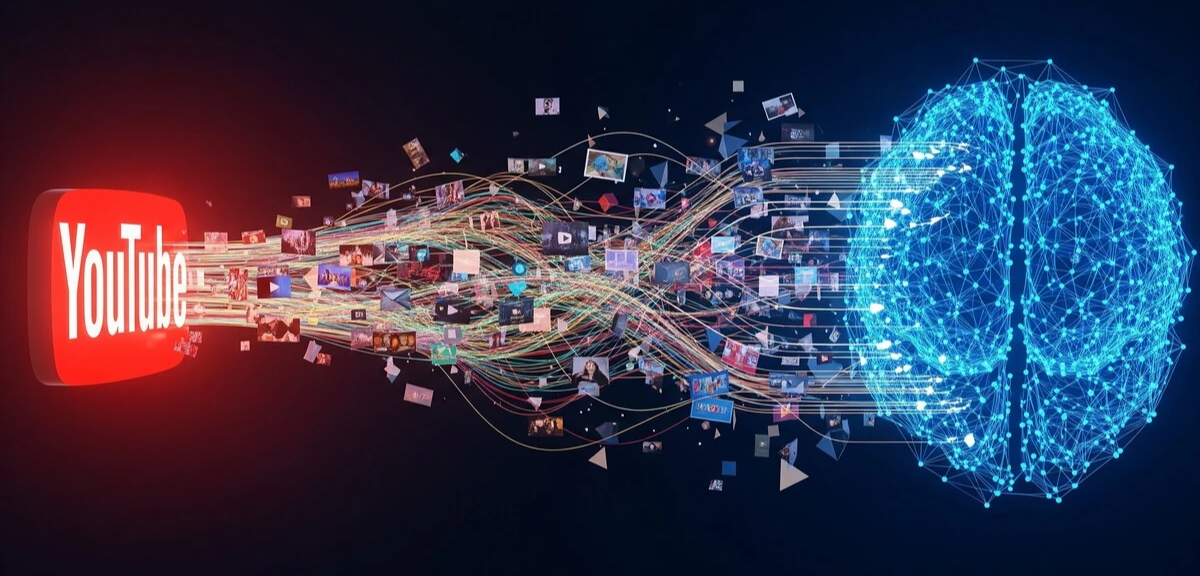
According to external media CNBC, the technology giant Google is using the large YouTube video library (a total of about 20 billion videos) under the flag to train AI models, including the large multimodular model Gemini and the latest video/audio generator Veo 3, which raises concerns among creators and relevant experts about a number of issues, including copyright.
One source disclosed this information to CNBC, and Google subsequently confirmed to CNBC that it did rely on the YouTube video library to train the AI model, but stressed that only a subset of the library was used and claimed to comply with specific agreements with creators and media companies.
In a statement, the spokesperson for YouTube stated: “We have always used YouTube content to improve products, even in the AI era. However, we are aware of the need to set up a fence and have invested in strong protection mechanisms that allow creators to protect their image and portrait rights in the AI era, and we will commit ourselves to doing so in the future.”
Experts pointed out that such use could trigger intellectual property crises for creators and media companies. Although YouTube indicated that it had previously shared relevant information, experts interviewed by CNBC indicated that creators and media outlets were generally not fully aware that Google was using its video library to train AI models.
YouTube does not indicate how many or what of the more than 20 billion videos on its platform have been used for AI training. However, given the size of the platform, even training only 1 per cent of content would be equivalent to 2.3 billion minutes of video data. Experts indicated that this was more than 40 times the amount of training data used by the competitor AI model.
Google mentioned in its blog post last September that YouTube content could be used to “improve product experience, including through machine learning and AI applications”. However, after uploading the content, the user was unable to choose to exit its video for use in Google training.
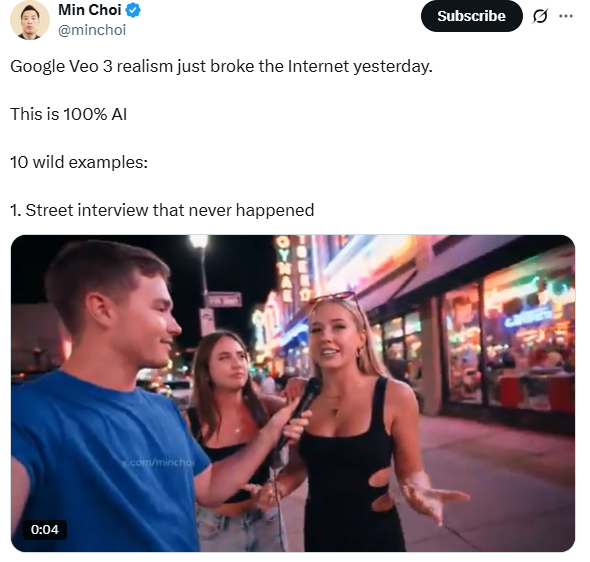
A completely AI-generated street interview.
The chief executive officer of the Digital Identity Protection Corporation Loti, Luke Arrigoni, commented: “They are likely to be using video data produced with a large amount of time, energy and personal thought by a large number of creators. This is helping the Veo 3 model to produce a synthetic version of these creators, a poor replica. It may not be fair to the creator.”
CNBC interviewed a number of prominent creators and intellectual property professionals, none of whom knew or had been informed of YouTube, indicating that their content could be used to train Google ‘ s AI model.
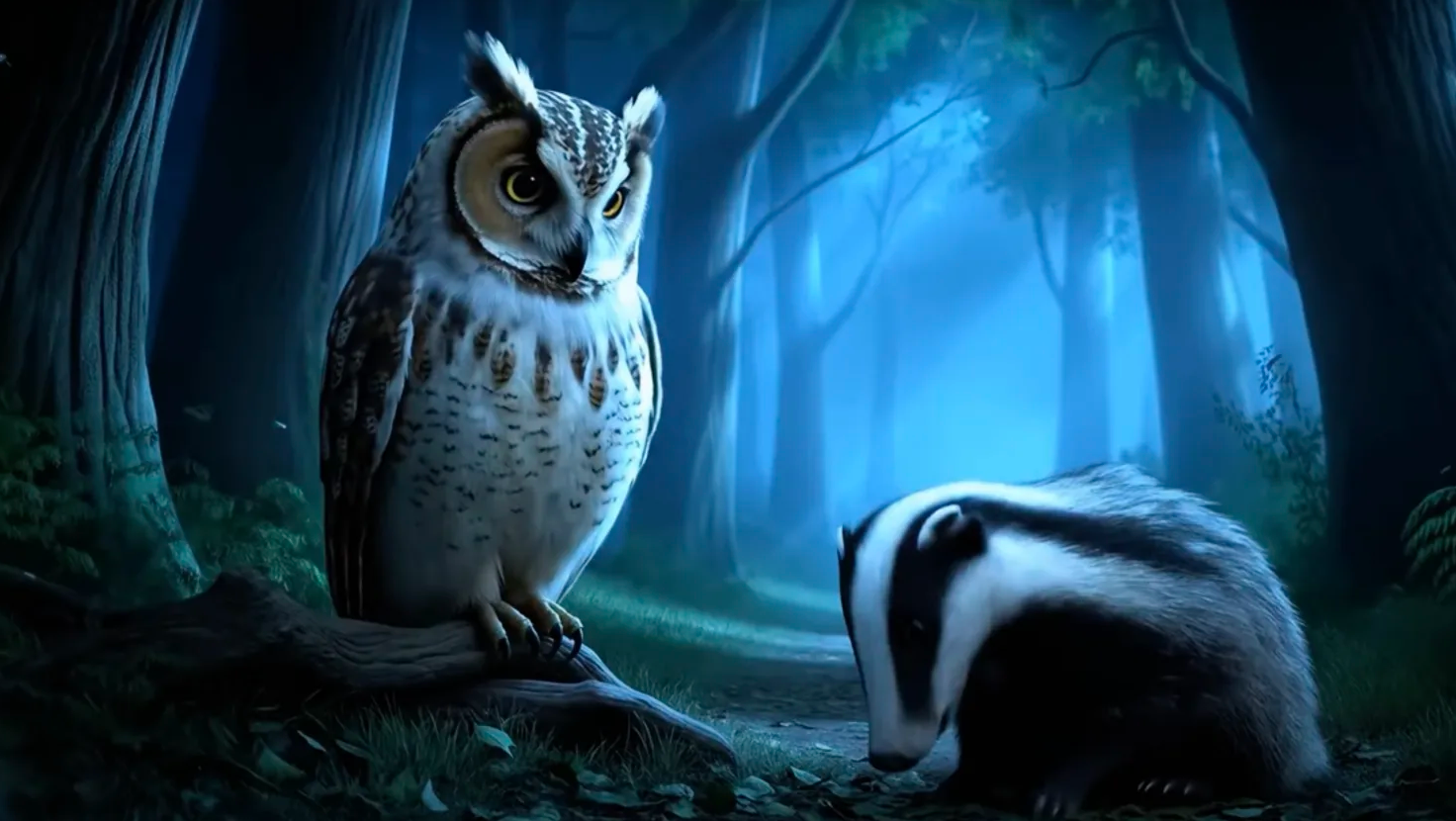
The news of YouTube using user video for training is of great interest in the context of Google’s high-profile launch of Veo 3 – one of the most advanced AI video generators in the market in May this year. At the launch, Google presented video series at the film level, including the scene of an old man on board the ship and a Pixar-style animal conversation. The images and voices of these scenes are entirely generated by AI.
According to YouTube data, on average 20 million videos are uploaded daily by independent creators and almost all large media. Many creators are now concerned that they may be unknowingly helping to train a system that may eventually compete or even replace them.
Arrigoni states: “Tell people what kind of video they have trained and how many videos they have trained will not undermine their competitive advantage. The real impact is their relationship with the creator.”
In the expert ‘ s view, even if the final output of Veo 3 did not reproduce the existing work directly, the content generated provided an impetus for commercial tools that could compete with the creators who offered the possibility of training data, all of which took place without signature, consent and compensation.
When the user uploads the video to the platform, it agrees to grant YouTube wide permission for content. The service clause states: “A global, non-exclusive, copyright-free, re-licensable and transferable licence is granted to YouTube to use the content of the service by providing it.”
Dan Neely, Chief Executive Officer of Vermillio, a company that helps individuals protect portraits from abuse and promotes the authorization of content security licences, stated: “We see an increasing number of creators discover that their fake versions are circulating on the platform — a new tool like Veo 3 can only accelerate this trend.”
Neely ‘ s company had challenged AI, alleging that its generated content violated the intellectual property rights of its clients, including individuals and businesses. He noted that while YouTube had the right to use them, many people who published content on the platform did not know that their videos were being used to train video-generated AI software.
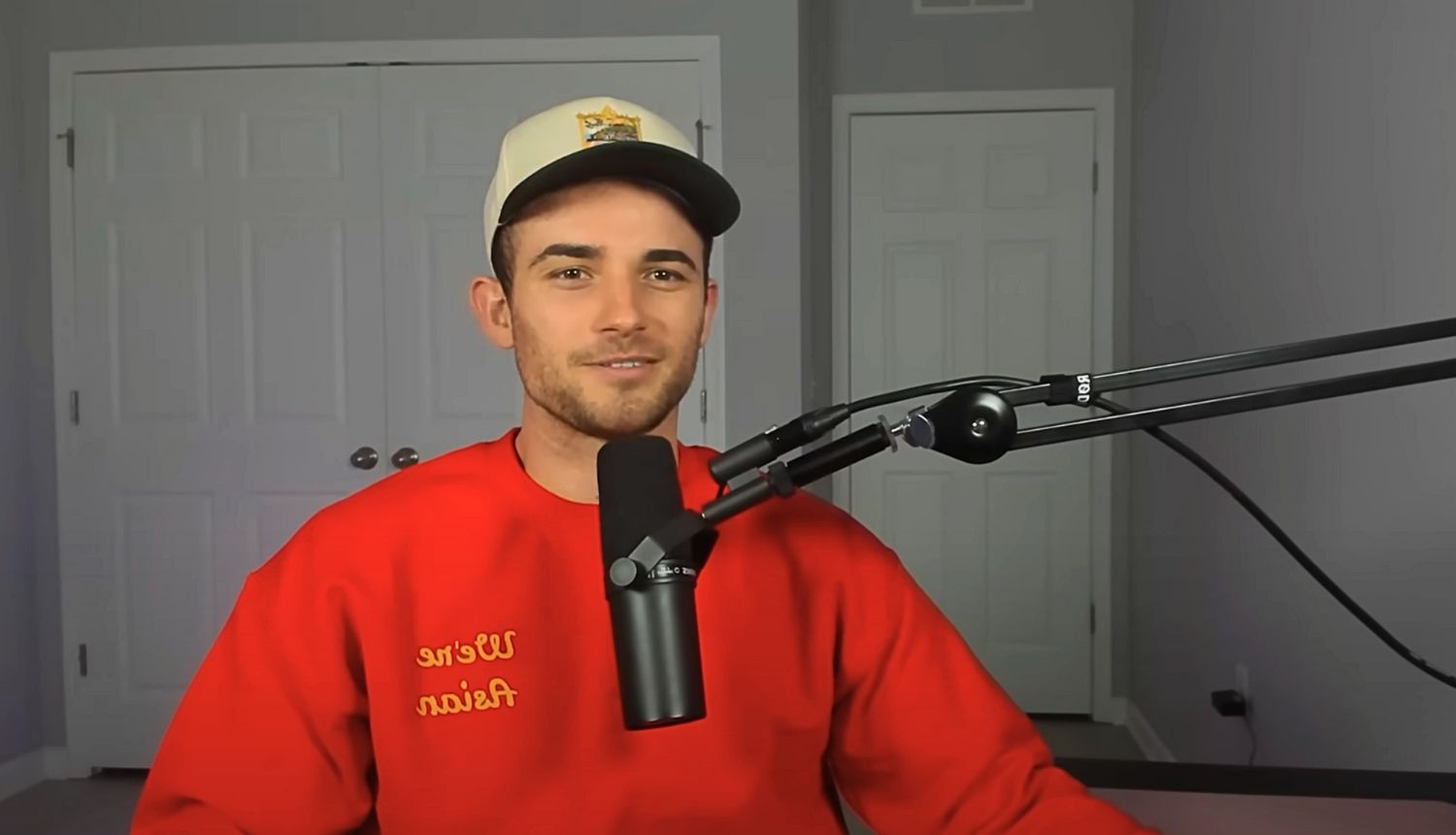
However, there are also creators who are open to Veo 3, even though it may have trained on the content of the creator. “I try to see it as a friendly competition rather than a rival.” Sam Beres, the creator with millions of subscribers on YouTube, said. “I try to be positive, because it is inevitable and an exciting necessity.”
Google has an exemption for its generation of AI products, including Veo. This means that Google will assume legal responsibility and pay the associated costs if users face copyright challenges because of the content generated by AI.
It is noteworthy that YouTube allows creators to opt out of third-party training data use for selected AI companies, including Amazon, Apple and In Weida. But users cannot stop Google from training its content in its own models.
Hollywood’s copyrighted response to AI-generated content has also begun. Last Wednesday, Walter Disney and the Global Film Industry jointly filed a lawsuit against the AI image generator Midjourney for violation of copyright. This is the first such suit initiated in Hollywood against AI-generated content.
With regard to the copying of human portraits by AI, Senator Josh Hawley of the Republican Party of Missouri expressed his concern at the Senate hearing in May this year: “The losers are artists, creators and young people whose lives have been subverted. We must give individuals strong and enforceable rights to regain control over their image, their property and their lives, otherwise this will never end.”